

The Best Ways to Cook Cauliflower
Cauliflower has gone from a supporting character to a full-on headliner in home kitchens. And hey, we love to see it. Once dismissed as broccoli’s paler, lamer cousin, it’s now the star of everything from loaded bowls to sheet pan dinners and moonlights as a cherished plant-based stand-in for buffalo wings, mashed potatoes, tacos, and plenty more. Roasted until caramelized, blended into soups, crisped in an air fryer, charred on the grill — cauliflower is one of those vegetables that changes personality depending on how you treat it.
So, how do you pull it off? Let’s walk through easy tips and suggestions on how to cook cauliflower, why they work, and a couple of approaches we don’t really recommend at all.
Enjoy it raw
Nothing wrong with keeping things simple. In its most natural form, raw cauliflower has a clean, delicate crunch that holds up beautifully in salads and crunchy snack plates. It’s mild enough to take on heavily flavored dressings but sturdy enough to retain its texture even after marinating.
Give this quick recipe a go: Toss some small florets with Greek yogurt, lemon zest, parsley, and a pinch of smoked paprika for a bright and refreshing chilled cauliflower salad that takes just a few minutes to throw together.
Oven-roasted cauliflower
If someone ran a poll for the best way to cook cauliflower, roasting would likely win in a landslide. We get it: roasting brings out a toasty aroma, deep golden edges, and a very satisfying texture on the inside. Plus, it pairs well with just about any seasoning.
Here’s an easy roasting suggestion:
- Toss Taylor Farms Cauliflower Florets with olive oil, cumin, and a sprinkle of sea salt.
- Spread on a hot sheet pan, crank the oven to 450°F, and roast until the edges look deeply caramelized (about 20–28 minutes, depending on size).
- Finish with lime juice or tahini.
That’s it! The higher heat helps the cauliflower florets brown faster, giving them big flavor without moving into the dreaded mushy territory.
For something a little different — yet entirely familiar — try our Cauliflower Mac ‘n Cheese Roast Kit. It comes with pre-washed, pre-trimmed cauliflower florets and a decadent cheese sauce, and you only need about 20 minutes. Simply roast and combine, and you’re ready to enjoy a savory, comforting bowl of (cauliflower) mac ‘n cheese with far fewer carbs than its starchy inspiration, all while sneaking in a few extra servings of veggies. Multiple wins on multiple accounts.
Air-fried cauliflower
Air-fried cauliflower is a weeknight miracle: crispy outside, tender inside, and far quicker than the oven. It’s also a fantastic snack option.
Try this restaurant-worthy air fry recipe:
- Season your cauliflower with paprika, garlic, or your favorite spice blend, then add a light coating of oil and air-fry at 390°F.
- Pause and shake the basket several times while cooking to keep the pieces crisp.
- Serve with a yogurt-based dip or swirl in some hot sauce with honey for a quick drizzle.
Find more air fryer recipes using vegetables here.
Grilled cauliflower
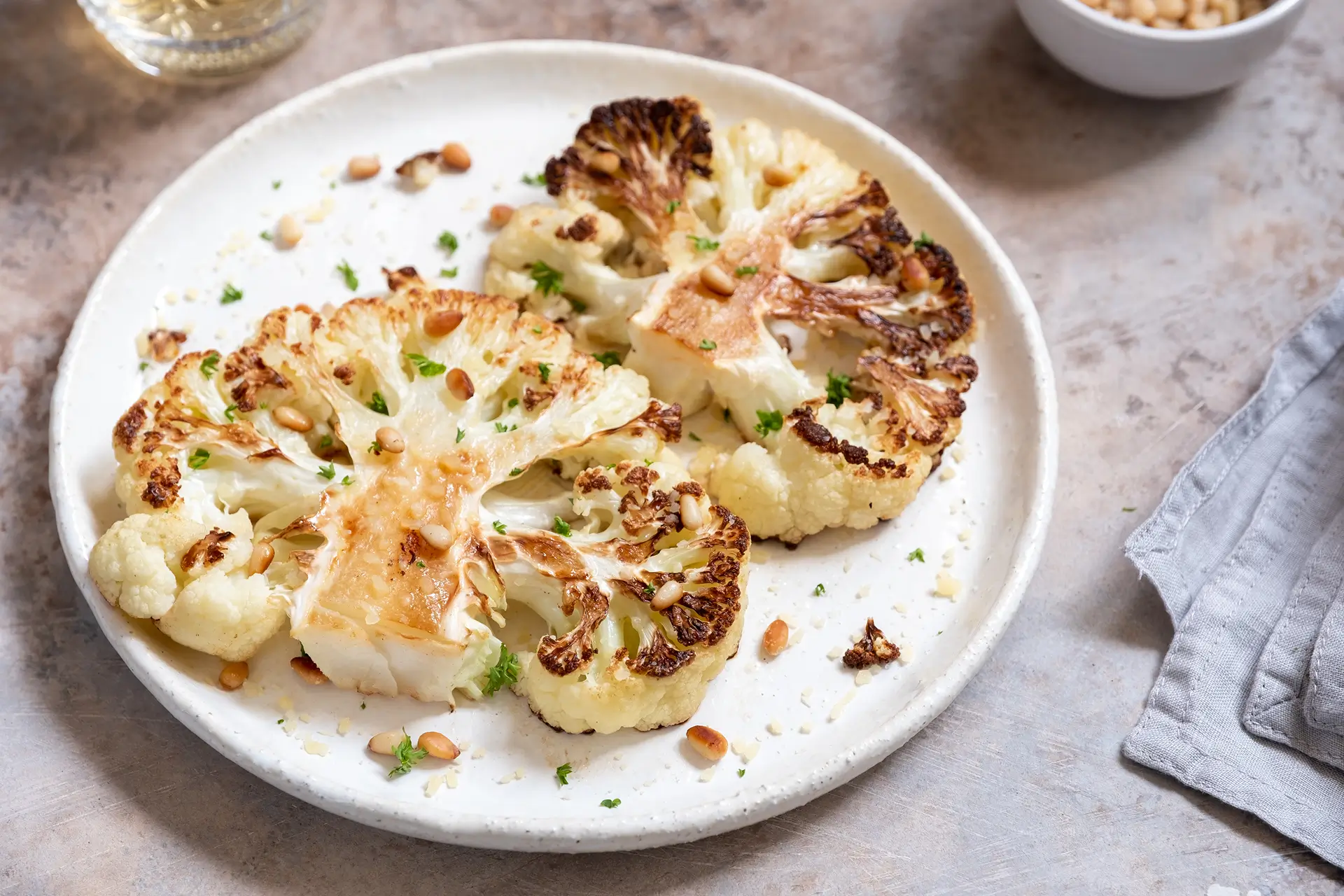
Grilled cauliflower is smoky, charred, and wildly underrated. It picks up smoky notes that feel right at home beside dishes like grilled chicken, seafood, and summer pastas. It works very well with big flavors, so, again, don’t be shy with the marinades.
Here’s a good starting point:
- Marinate large florets or thick cauliflower slices in olive oil, lemon, garlic, and herbs.
- Grill over medium-high heat until char marks form and the centers feel tender.
- For a finishing touch, add a spoonful of chimichurri or basil pesto.
Pan-seared or sautéed cauliflower
If you like cauliflower with crisp edges but don’t want to turn on the oven, this is the method for you. Cauliflower responds really well to direct heat. In fact, it welcomes it with open arms (theoretically).
Fast and fancy sautéed cauliflower:
Heat a skillet over medium-high heat, add a splash of oil, and let the cauliflower florets sear until golden. Then add some veggie broth or stock (or even just a small bit of water simmered with a smashed garlic clove and some herbs), coconut milk, or soy sauce, and simmer briefly until tender.
This creates layered flavor in just a few minutes and will convince anyone you’re cooking for that you’re an up-and-coming culinary innovator. (No need to credit us.)
In soups and stews
This method is one of the most comforting ways to cook cauliflower, especially in cooler months. Cauliflower is a natural thickener, which is why it can play such a strong (often uncredited) role in soups. It can also hold shape nicely in brothy recipes and infuses a deeper flavor. Use it in creamy purées, veggie‑heavy broths, and blended soups that rely on cauliflower for body.
Pro tips for soup success:
- Simmer cauliflower with onions and garlic in broth, then blend with a drizzle of olive oil for an ultra-smooth purée.
- Add florets toward the end of cooking stews so they stay intact and pleasantly firm.
- For chunkier soups, keep pieces slightly larger so they hold up
The cauliflower cooking methods we’d maybe retire…
Much like methods for cooking broccoli, cauliflower loses a lot of character when boiled into oblivion. It pulls away flavor, softens the florets too quickly, and leaves you with something that feels more waterlogged than enjoyable. Over-steaming has a similar effect: the texture collapses, leaving you with mushy, bland florets.
Hey, no judgment. If you must steam it, keep the cooking time short and cool the florets immediately under cold water to help preserve texture and nutrients. Lightly steaming is fine and is actually one of the most nutritious ways to cook cauliflower — just don’t let it cross into overdone territory. Your florets deserve so much better.
Begin Your Path to Cauliflower Greatness
Don’t dismiss this delightful cruciferous king as a forgettable side or a begrudging plant-based substitute any longer. Cauliflower is wildly adaptable and can hold its own with almost any type of meal. The real magic comes from choosing the cooking method that highlights and complements its natural flavors while keeping that satisfying bite fully intact. You’ve now got a full lineup of techniques and easy recipes to make that happen.
Plus, using Taylor Farms Cauliflower Florets means you skip straight past the trimming and chopping stage. It’s all prepped, washed, and ready for whatever direction you want to take it. Check our product locator to see what’s available near you, then try out the method that’s calling your name.


